


Beware of Medicare Scams
-->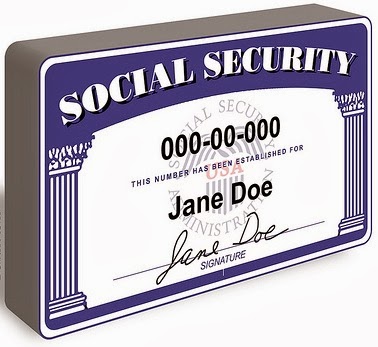
Over the years, I've warned readers of Medicare, Social
Security, and other scams targeting seniors. It looks like there is one
circulating in Missouri and Illinois now. If you are a senior or care for one, be alert for these scams. Warn your
loved one (again) to not respond with personal information.
Labels: Medicare, scams, Social Security


Thursday, March 25, 2010
Social Security Going Bust Faster than Expected

According to the New York Times, the bursting of the real estate bubble and the ensuing recession have hurt jobs, home prices and now Social Security. This year, the system will pay out more in benefits than it receives in payroll taxes—an important threshold it was not expected to cross until at least 2016, according to the Congressional Budget Office.
It seems that payments have risen more than expected during the downturn, because jobs disappeared and people applied for benefits sooner than they had planned. At the same time, revenues have fallen because there are fewer paychecks to tax. Analysts continue to try to predict the year when Social Security will pay out more than it takes in because they view that threshold as a tipping point — the first step of a long, slow march to insolvency unless Congress strengthens the program’s finances. And how can they since they are already increasing taxes for health care?
As we Boomers hit retirement age, it’s tempting to apply for benefits in hopes of recouping at least some of what we’ve paid in over a lifetime of work. More so if your income has taken a hit from job loss or cutback. Frankly, I don’t expect to collect even a small percentage of what I’ve paid in, even if I were to start collecting now. And our kids will never see what they are paying in now.
When will we learn that we can’t support everyone in the manner in which we’ve become accustomed? Social security was a flawed program based on flawed premises from the beginning. It has created at dependent class of people who haven’t planned well for their retirement, assuming the government would take care of them. (It was never supposed to be more than supplemental income, but quickly morphed into total dependency for many seniors). Its costs have exceeded projections from the beginning and depending on Social Security has reduced self-responsibility in a generation of people. On one hand I’m glad my mom has Social Security, but on the other hand, I know she’s collected far more than she’s paid in. It’s a nice luxury, but can we afford it for our generation? Or do we need to reconsider? What do you think?
Labels: Social Security
Friday, December 28, 2007
Medicare at Risk
The WacoTrib.com has an excellent article pointing out how both Medicare and Social Security are at risk due to escalating costs and poor management. Some key points in the article include:
Social Security is threatened both because it is underfunded and Congress refuses to act, and because of Medicare problems.
Social Security’s funding problems are big. Medicare’s funding problems are significantly bigger, threatening to overwhelm the entire federal budget if Congress fails to act.
Although separate, the Social Security and Medicare programs are actually intertwined. Seniors who receive Medicare must pay monthly premiums that are deducted from their monthly Social Security checks. Due to the runaway health care costs, Medicare premiums increase each year above the cost of living adjustments added to Social Security.
Out-of-pocket expenditures to cover Medicare premiums, deductibles and co-pays for parts B and D of Medicare will consume 29 percent of the average Social Security benefit check this year. A worker who is 30 today can expect premiums, deductibles and co-pays for parts B and D of Medicare to absorb about 50 percent of his initial Social Security benefit.
Without congressional action, out-of-pocket Medicare costs will exceed Social Security benefits for today’s newborns. At that point, Medicare will have eliminated Social Security.
Government auditors estimate fraud in the Medicare program adds up to billions of dollars annually. The Government Accountability Office lists Medicare as a “high-risk” program due to fraud and excessive costs.
With facts like this, why would we even consider government health insurance or Medicare for all? Yes, health care costs are exorbitant for everyone, but clearly, the government has prove for the past 40+ years can’t be trusted with either our money or our health care.
Labels: Medicare, Social Security
Thursday, November 15, 2007
Boomers Nearing Retirement -- or Are They?
Liz Taylor of the Seattle Times offers some fascinating – and frightening—stats on the status of retirement and retirees today. She talks about the 78 million Baby Boomers who have started turning 60. She states:In 2000, Americans 65 or older accounted for 12 percent of the population. In 2030, that figure will climb to nearly 20 percent. Yet in 2075, when every boomer is dead, people 65 or older will be 23 percent of the population. The numbers will go up, not down.
The shift is the result of two immutable forces that have been going on for decades and will continue: declining mortality and declining fertility.
This "demographic tsunami" has no precedent.
There’s a litany of institutions and supports that will soon be overwhelmed — Social Security, Medicare, assisted living, our doctors' offices — yet the issue is barely on the public's radar.
When Social Security chose age 65 as the official retirement age in 1935, the average life expectancy was only 63. Today, boomers who make it to age 60 are likely to live to 83.
Employers are responding with more flexible schedules and benefits to attract seniors who will work into their 70s and even 80s, both because they are healthier and because they have not saved for retirement.
There’s a lot more information in the article. Worth reading and pondering. How are you coping with being an aging Boomer?
Labels: Baby Boomers, Medicare, retirement, Social Security
Tuesday, May 01, 2007
Medicare and Social Security in Trouble
According to the Washington Times, the results of the annual Social Security and Medicare Trustees report released this week are not good. The government's will is once again bigger than its wallet. The report shows an unfunded liability in Social Security and Medicare over the next 75 years at $51.7 trillion.According to John Goodman, president of the National Center for Policy Analysis, "In just five years, these two programs will require 10 percent of other federal revenues. That means in five years the federal government will have to stop doing about one in every 10 non-entitlement things it has been doing in order to balance the budget and keep its promises to the elderly."
Although the Bush administration has emphasized Social Security reform, the reality is that Medicare is in worse shape. Medicare expenditures are expected to reach $483 billion this year, making it the second-largest government expense behind the Defense Department.
According to the article, “Medicare costs are at the mercy of a two-headed monster. A ballooning price tag for medical care will be coupled with an explosion in the number of retirees with 76 million members of the baby boom generation moving closer to becoming eligible for benefits. Combined, those forces will overwhelm the Medicare program by 2019, while Social Security is slated to run out of money by 2041.”
The crisis “has been exacerbated by the addition of the new prescription benefit," said John Palmer, an economics professor at Syracuse University and a public trustee. "The challenge here has been understated."
Under a law passed in 2003, President Bush must propose a strategy to address the program's fiscal crisis when he submits his 2009 budget and Congress must immediately consider the proposal, but neither the president nor Congress is expeted to pass a new law.
U.S. Senators Chuck Hagel (R-NE), Jim Webb (D-VA), and Representatives John Tanner (D-TN) and Mike Castle (R-DE) reintroduced legislation in the Senate and House this week to create a Comprehensive Entitlement Reform Commission. The commission would review Social Security, Medicare and Medicaid and make recommendations to Congress that would sustain the solvency and stability of these three programs for future generations.
Medicare has increased US health care expenditures from its inception. The likelihood that there will be benefits available when we boomers reach retirement age is slim. And unless politicians are willing to bite the bullet and make major changes, the entire system will collapse on itself. And yet, the clamor for universal health coverage or extending Medicare to everyone continues unabated. When will we ever learn?
Labels: Medicare, Social Security
Saturday, March 10, 2007
Are You Saving Too Much for Retirement?
Tom Blumer at BizzyBlog offers some down to earth advice on saving for retirement. He questions an AtMarketWatch article where the author suggests that Americans are saving too much for retirement. He counters this with some very reasonable “what ifs” that bear consideration.As I read about Social Security, Medicare and especially the impact illegal immigration is having on these already precarious programs, I don’t think we Gen Sandwichers can save too much for retirement. And if we do, well… our kids will be a step ahead.
Labels: Baby Boomers, finances, Medicare, retirement, Social Security
Wednesday, November 08, 2006
Who Will Fund Your Retirement?
A study from the Harvard University Generations Policy Program edited by Paul Hodge, Chair, Global Generations Policy Institute, suggests that the aging of America’s baby boomer women is the most urgent issue facing our nation in the 21st century.He points that that since women spend more of their years in care-giving for both children and aging parents, they have less time to build for retirement. In addition, women generally earn less than men.
There’s really nothing new in this study. It reinforces what we’ve known for years. What it can do, however, is serve as a reminder to Gen Sandwich women (and men) to plan for our own retirement. Don’t count on Social Security, which penalizes those who move in and out of the workforce and which may not be solvent by the time we get there anyway. (What we know for sure is that there will be a lot of Boomer retirees and far fewer workers to support us, so the prognosis for Social Security isn’t one I plan to bank on.)
Anything you can do to take control of your retirement fund will pay off in the long run. Invest a little each month in your own IRA. You’ll be amazed at what a small amount, invested regularly, will grow into when it can accumulate free from taxes and can reap the power of compounding. And the earlier you start, the better off you’ll be. We started investing very small amounts in our 30s and have watched those IRAs grow into sizable nest eggs for our retirement.
It’s not depending on the government that’s going to give you security as you age. Government policies can change overnight, blown as they are by the winds of politics. This nation was founded on individual responsibility, and that’s what will give us the best hope for our retirement.
Labels: Baby Boomers, retirement, sandwich generation, Social Security, women
Thursday, October 05, 2006
With an Eye Toward Our Future
As I’ve been consumed this week dealing with the donut hole (and not finding good solutions yet), today there’s news for those of us who are baby boomers. The experience with our parents has probably already taught us that we can’t depend on Medicare and Social Security to cover everything, even though my mom feels that they should. But soon, these concerns will apply to us as well.According to a story from the Wichita Eagle, about the time that three million baby boomers become eligible for Medicare benefits next year, the federal insurance program is proposing to cut payments to physicians by 5.1 percent. This marks another round of proposed decreases in reimbursement rates to doctors, mandated by what physicians call a perpetually flawed formula and once again threatening access to care as fewer doctors say they can afford to see patients with Medicare.
When I worked in health care years ago, both Medicare and Medicaid were blamed for the spiraling costs of health care. Doctors were already limiting their practices to a certain percentage of Medicare patients, and even fewer Medicaid patients. In California, it’s increasingly difficult find doctors who will treat Medicaid patients. Is it likely that by the time we get there, doctors will accept fewer Medicare patients as well? And is it likely that our parents will find it more difficult to find care?
Federal Reserve Chairman Ben Bernanke called for an urgent overhaul of Social Security and Medicare, warning that failure to do so soon could lead to dire economic consequences as the first wave of baby boomers—76 million Americans born between 1946 and 1964—begin taking early retirement in 2008.
Federal lawmakers are unlikely to make the decisions that will solve the problems. As the population ages, fewer workers will be funding our benefits. So it’s important that we begin to look ahead, plan ahead, and be prepared to take responsibility for our own needs. If we depend on the government, we may be sadly disappointed. The biggest problem with the donut hole is that seniors expected the government to take over their prescription drug needs. As the plan is failing, our parents feel betrayed. Let’s make sure we don’t have the same experience.
Labels: donut hole, Medicare Part D, Social Security
Wednesday, October 04, 2006
Possible Help With Medicare Prescription Drug Plan Costs
I’ve been calling around today to see if we can get help with the donut hole. After almost an hour on hold and calls, I learned that the Social Security Administration has a program to help low-income seniors when their prescription drug costs have exceeded the limit. If they qualify, the government will pay the Medicare Part D premium and 95% of the cost of the medications. You can apply online or call for an application (which they say will take three weeks to reach you) at 1-800-772-1213 or TTY 1-800-325-0778, 7am-7pm Monday-Friday.In order to qualify for this program, the applicant’s combined savings, investments, and real estate (other than their home, vehicles, burial plots, or personal possessions) must be worth less than:
$11,500 if you are single, a widow(er) or your spouse does not live with you; or
$23,000 if you are married and living together
To complete the application, you will need access to the following documents for the applicant and his or her spouse (if married and living together).
bank account statements, including checking, savings, and certificates of deposit;
Individual Retirement Accounts (IRAs), stocks, bonds, savings bonds, mutual funds, other investment statements;
tax returns;
payroll slips;
most recent Social Security benefits award letters or statements for Railroad Retirement income, Veterans Benefits, pensions and annuities; and
the cash value and face value of any life insurance policies you have.
Of course, the application is complicated enough that many seniors will need help completing it, and anyone who has been responsible in providing savings, life insurance, IRAs, etc. for themselves over the years won’t qualify. Unfortunately, it appears that my dad doesn’t qualify by just a few dollars. And yet, his prescription drug costs are in the hundreds every month. Hundreds that used to be covered by his Medicare wrap HMO. I wonder who is winning with this program? Not us. I’m feeling smooshed…
Labels: Medicare Part D, Social Security