


Are You Aware Of The Two Midnight Medicare Rule?

One of the changes in the 2014Medicare proposed prospective payment regulations is the two-midnight rule. This
rule requires that inpatients must remain in the hospital over two midnights in
order to qualify for inpatient reimbursement.
Any stay shorter is considered outpatient, which has a much lower reimbursement
rate. Fortunately these rules have been
delayed until September 30, 2014, but it’s important that you stay on top of
this. It could have severe financial ramifications for you or your aging
parent.
Hospital leaders have
vigorously opposed
the two-midnight rule during the past year, arguing that the policy is unclear
and undermines the medical judgment of physicians. The Centers for Medicare and
Medicaid Services (CMS) introduced the policy to better monitor Medicare
payment of short inpatient stays and ensure inpatient admissions are medically
necessary. But the fact remains that this is yet another unintended (or
intended?) consequence of Obamacare that will affect care for the elderly.


Wednesday, February 05, 2014
Beware of Medicare Scams
-->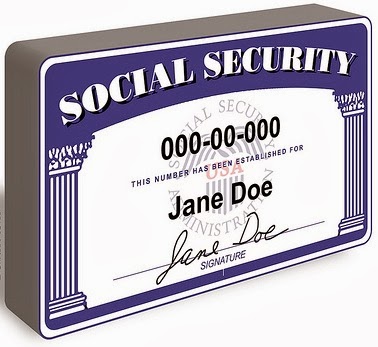
Over the years, I've warned readers of Medicare, Social
Security, and other scams targeting seniors. It looks like there is one
circulating in Missouri and Illinois now. If you are a senior or care for one, be alert for these scams. Warn your
loved one (again) to not respond with personal information.
Labels: Medicare, scams, Social Security
Friday, June 29, 2012
Medicare Managed Care Chronicles: After all, she’s 91… … (Part 5)

Mom’s PT documented that she was still progressing, that she
was still a fall risk, and that she was benefiting from the exercises and
activity. He noted that he had not yet released her to walk independently. He
indicated that she is alert and oriented and understands her limitations. He
said that statistically, a patient’s diagnostic level drops a level upon
discharge to home or assisted living, so discharging prematurely is dangerous.
Later in the day he called United Health, and was told that a denial had not been issued, that they were still
reviewing the case. That it was still pending. United Health redirected him to
the HMO, which confirmed that a denial had been issued. The rep would not
budge. She cited Mom’s age, and the
fact that they have a fixed amount of money, and Mom had spent that so she had
to be denied.
Given the multiplicity of mixed messages, we felt we had no
choice but to move Mom to assisted living. She was clearly not ready, but was
being forced to a lower level of care that she
has to pay for. She was discharged with orders to receive both home PT and OT two to three times per week in
assisted living. That didn’t happen. She had a few visits and is now being
discharged by home health. No one can tell me why. As a Medicare subscriber,
she has the right to receive care to
restore her to her prior level of functioning, as long as she is progressing. She
was progressing until she was denied that right by United Health and her HMO.
By June 7, I still had not received a decision on the “expedited
appeal,” now a week late. I called again and received terrible customer service
from United Health who gave me a lot of misinformation. I finally spoke to a helpful
supervisor, who offered to receive and forward a summary of my complaint. I wrote
up the entire sordid affair and forwarded it to him, but have had not official response.
Finally on June 8 I received a written confirmation of the denial--dated May
30!
It’s been a steep learning curve. Indeed, both private
insurance and Medicare are already throwing granny under the bus. The elderly
are not getting the care they have paid for and deserve. And we aren’t even
under Obamacare, which removed $500
billion from Medicare. Folks, we’ll be dealing with this type of ordeal for the
rest of our lives, fighting for care for both our parents and for us Boomers
who become eligible for Medicare over the next 20 years. If you’re old, don’t
expect to have your insurance cover you. Expect age discrimination. Expect to
spend many hours fighting coverage battles. And even if you are extremely
tenacious, expect to lose.
Photo Credit iStockphoto
Labels: elderly parents, HMO, Medicare, rehab, United Health
Thursday, June 28, 2012
Medicare Managed Care Chronicles: After all, she’s 91… … (Part 4)

When I again spoke to the HMO clerk, she was clear that the
decision was hers and she was not willing to reconsider, even though she had
considered only the selective portions of the medical record that upheld her
opinion. She (who had never seen my mother) declared that Mom had reached her
plateau (contrary to the PT notes) and after all, she is 91. The fact that she could transfer from bed and walk with
standby was sufficient for to make this decision, contrary to the professionals
who know my mother and were working with her! Too bad--there was nothing more
she could do.
I was appalled! This is clearly a case of age discrimination
and of an insurance clerk overriding the professional opinions of the staff
treating the patient – the very thing Americans have feared with national
health insurance now happening before my eyes with a private pay patient.
Photo Credit iStockphoto
Labels: elderly parents, HMO, Medicare, rehab, United Health
Wednesday, June 27, 2012
Medicare Managed Care Chronicles: After all, she’s 91… … (Part 3)
The next day (May 31) we learned that the initial denial had
been issued by her HMO’s case manager. We had not even known of her existence
until this point. This was beginning to feel like a shell game, never knowing
who to talk to or who had the authority. I asked her surgeon and PT to help
with the appeal. Both agreed and made calls. The PT had run more tests and
stated that Mom was still a fall risk. The clerk never returned the physician’s
call. Remember, their professional opinions had been overridden by an insurance
clerk! And the decision seemed to be age-related. I didn’t think the death
panels had been activated yet.
I also called United Health again, trying to figure out who
had the authority to reverse this decision. I was told I could file an expedited
appeal, meaning they to respond within 72 hours. However, if they upheld the
denial we would be responsible for any additional days. The rep said the
clinical staff would review all of the information and contact both the PT and
the physician for more information. You can imagine the uncertainty this
creates for the patient and family, not knowing if the insurance they have paid
for and depended on for years will continue to cover needed services. It puts
the entire burden of risk on the patient and none on the insurance. Not quite a
fair situation! The rep was quite glib in saying that if Mom needed skilled
care, of course she should stay in rehab, but of course, he could not assure us
that the care could be covered. We decided to keep her at rehab until a family
member could move her on Saturday, June 2, not knowing if it would be covered
or not. The rep also indicated that if we were denied, there was yet another
level of appeal, but it seemed like a moot point since by then she would already
have moved.
Photo Credit iStockphoto
Labels: elderly parents, HMO, Medicare, rehab, United Health
Tuesday, June 26, 2012
Medicare Managed Care Chronicles: After all, she’s 91… … (Part 2)
We waited all weekend for a response. Did we need to move
her or not? It was a time of uncertainty, which caused her blood pressure to
rise and her progress to regress a bit. The rehab facility staff said the delay
was unusual. Responses to appeals were usually received quickly, usually within
the hour. We were at a loss to know what to do. It was a holiday weekend. No
one could answer any questions. Her discharge date was scheduled for Memorial
Day. We had made arrangements with Assisted Living, but they could not receive
her on the holiday.
We didn’t receive any response until two days after Memorial Day, on May 30 at 4:00 pm
when staff informed me that they had received a verbal denial. I called HSAG again.
The rep said that the earlier denial would stand. The last covered day would be
May 30 (today). I asked her the reason for the denial. She said that the
patient was medically stable and ambulating independently for 200 feet. This
was not true and not what the record said. The rep said that they had determined
that she had hit her plateau. “After all,
she is 91.”
Photo Credit iStockphoto
Labels: elderly parents, HMO, Medicare, rehab, United Health
Monday, June 25, 2012
Medicare Managed Care Chronicles: After all, she’s 91… (Part 1)
I confess, I'm still amazed at the craziness of being a GenSandwicher. Especially in dealing with the health care system. And we don’t even have ObamaCare yet! For the next five days, I'm going to share how I've spent the past months of my life. I hope it will alert some of you remain vigilant and determined in seeking coverage for your Medicare- and managed care-covered aging parents. Mom’s insurance is a Medicare Advantage program run by United Health and managed by an HMO. Your experience may differ depending on your specific situation.
Mom fell and broke her hip in mid-April. She was in the hospital for a few days, then moved to rehab for about six weeks. Mom’s last week in rehab was amazingly frustrating. Her physician and physical therapist (PT) agreed that she was making good and steady progress toward reaching her prior level of functioning, which is apparently what the professional standard of care is. Although they recommended she remain in rehab for several more weeks, we had heard rumors that an insurance denial was in the works. It finally came in at 3:00 pm the Friday before Memorial Day. Her last day of covered care was to be on Memorial Day. Really?
All of the rehab facility staff we needed to help with our appeal had already disappeared for the weekend, leaving me with a clerk who had never done a Medicare appeal. In case you also haven’t navigated an appeal, here’s my experience. There is a number you call to a group called HSAG to file a Medicare appeal. After the requisite time on hold, I was asked why I was appealing the decision. I quickly went through all the reasons: she’s still progressing, had not reached her prior level of functioning, was still a fall risk, had not been released to do much without standby assistance, her physician and PT believed she needed more time, etc. I went through it quickly because I assumed I'd be asked clarifying questions. The clerk simply took the information (or so she said) and thanked me. She said that she would forward the appeal to the United Health appeals and grievances department, which could take up to two days to make the decision. When I asked the reason for the denial, she indicated that the patient had reached her “expected level of recovery” since she could get out of bed and to the bathroom. “After all, she is 91 years old.”
Yes, but prior to her fall, she was living independently in her own home, driving the old people around, cleaning, shopping, managing her finances. Living life. To justify the denial they now say, “After all, she is 91 years old.”
Photo Credit iStockPhoto
Labels: elderly parents, HMO, Medicare, rehab, United Health
Tuesday, March 16, 2010
Physicians Frustrated by Medicare

Increasingly physicians are being frustrated by Medicare and the witch-hunt for fraud. Many are considering dropping their Medicare and Medicaid patients, which would result in higher profits and less hassle. Most don’t want to do this, but they don’t see many options. For example, here’s a letter by a primary care physician who is ready to drop Medicare. What will he do when the entire system is run by the government?
Other physicians are cost-shifting underpayments from Medicare to private patients. What will they do when the entire system is run by the government?
Meanwhile, the government tries to squeeze even more blood from these medical turnips. According to Human Events, since 2001, the real inflation-adjusted payments to physicians under Medicare Part B have decreased well over 10 percent, and many specialties have seen far greater cuts. These cuts would have been even larger, except that Congress has acted to block the cut every year since 2002. Yet the underlying formula laid out back in 1997 remains unchanged, and the current planned cuts are 21.2 percent for this year, along with about 5-percent cuts for the next few years, all not including inflation. Because of this, many doctors will go out of business and many more will cease to participate in Medicare and Medicaid (where payments are most often tied to Medicare rates) if these cuts occur. If health care reform is, in fact, supposed to increase access to health care AND promote quality care, this downward path is unsustainable. But in Washington, the cost of paying doctors for actually providing care is not being considered as part of reform.
And don’t forget that Medicare is the biggest denier of claims, denying 6.85% of claims in 2007-2008, which is more than other insurer. So who's the most "heartless" now? And why should Americans accept the idea of being forced into a government-run system when, based on documented government experience, they will be more likely to see their claims denied?
Folks, the health care bill will likely come up for a vote this week. Have you made your voice heard? If not, you and your parents will regret it. Soon.
Labels: health care reform, Medicare
Monday, November 30, 2009
Can You Find a Medicare Physician?

As our elected representatives rush toward national health insurance, I keep reading reports of physicians opting out of Medicare. I’m not surprised – Medicare pays physicians considerably less than their costs. Yes, the government expects physicians to lose money providing medical care.
"Government payers, without question, are the worst payers in health care," said John Rivers, president of the Arizona Hospital and Healthcare Association. "Medicare shortfalls in hospital payments represent nearly $1 billion in Arizona alone. And those costs ultimately get shifted onto the backs of privately insured individuals in the form of a hidden health-care tax." As a result, the five physicians at the Mayo Clinic in Arrowhead, AZ practice will stop taking Medicare payments for primary-care services, effective Jan. 1, 2010. This will affect about 3,000 seniors. Five doctors have practices at the clinic. Multiply this across the nation and you get an idea of the impact of the monopoly the government already has on health care. This impact will increase over the next few years as the first of the Baby Boom generation, estimated at more than 78 million, begins to turn 65 in 2011 and qualifies for the nation's largest insurance program for seniors. The Medicare Board of Trustees has predicted that the program will be bankrupted by 2017.
This trend is exacerbating another equally disturbing trend. There is a shortage of internists nationally — the American College of Physicians, the organization for internists, estimates that by 2025 there will be 35,000 to 45,000 fewer than the population needs — and internists are increasingly unwilling to accept new Medicare patients.
So here’s the question: have you or your aging parent had difficulty in finding a Medicare physician? If so, how have you solved the problem?
Photo credit: PicApp.com
Labels: Medicare, physician shortage
Tuesday, November 10, 2009
But Can You Find a Doctor?

Saturday night in a rare special session, the Democrat-led House of Representatives passed the Pelosi health care bill in by a slim margin of 220 to 215. This bill, if passed by the Senate, will allow the government to take over approximately one sixth of the American economy. However, that’s not the whole story.
Have you tried to get a doctor for a Medicare patient lately? Increasingly I’m hearing of people having problems even finding a doc who will take Medicare. And if you can’t find a doc, what good will even the best medical insurance do you? A friend experienced this recently. After years of having no health care, she finally got Medicare through Social Security disability. We were thrilled--until she tried to find a physician. You see, since Medicare pays only 80 cents on the dollar, physicians lose money treating Medicare. If they have limited hours available, expensive malpractice insurance, a huge office staff necessary to process the Medicare and insurance requirements… who will they fill a slot with? Since there’s already a physician shortage in many parts of the country, can you blame them for making the best business decisions they can? But if things are bad now, the health care bill will make it worse.
Dr. Herbert Pardes, president and CEO of New York-Presbyterian Hospital, wrote an excellent Wall Street Journal article called The Coming Shortage of Doctors: Our aging population is challenge enough. Try to get an appointment after health-care reform. He mentions several critical points:
• If the doctor shortage is not addressed and health-care reform is signed into law, millions of Americans will likely find themselves able to obtain insurance for the first time—but may be unable to find a doctor without a long delay. Why? Because expanding the number of insured patients but not the number of doctors will only increase the demand for services that already must meet the demands of an aging population.
• Even in the absence of health-care reform, according to the American Association of Medical Colleges, the U.S. will face a shortage of at least 125,000 physicians by 2025, when the number of people over 65 will have increased by about 75% of what it is today—to 64 million from 37 million today.
• Doctors are also aging. By 2020, as many as one-third of the physicians currently practicing will likely retire.
I wish our esteemed lawmakers would understand the problem before they try to “fix” it!
Photo: PicApp.com
Labels: aging, Medicare, physician shortage
Tuesday, October 20, 2009
Time to Sign up for Medicare

My hubby turns 65 in December and we’re way behind. Between his summer of medical problems, his recent surgery, and caring for Mom, we haven’t even begin to look at his Medicare options. Frankly, we don’t want to. We have good insurance. We’ve had it for 30 years. We like it. We don’t want to change. But apparently he’s required to move to “the government option” at 65, regardless of his choices. So we need to do some quick work, learning the difference between Medigap and Medicare Advantage (which BTW is under attack from Congress and may not be here next year).
Of course, all of this could be a moot point in a year if the Democrat-run Congress has its way. Within a year or so we’ll all be under the public (read: government) option fighting for access to underpaid physicians. And seniors will be the least served as the government takes a reputed $450 billion from Medicare over the next ten years to provide services for a mere 16 million more people, including (yes, Joe Wilson was right), illegal aliens.
But enough whining. What’s your experience? What should we do? What are the stumbling blocks? What do we need to be aware of? I remember the debacle of trying to understand Medicare Part D for my stepdad. Never did really conquer that one. Now we need Parts A, B, and D. And C? And J? I just read Nearly 65? Time for the Medicare Maze and cringed. It’s a good overview, though, and offers links to other helpful resources. Guess I’d better get busy… Help!
Photo Credit: PicApp
Monday, May 11, 2009
Why We Can’t Afford National Health Insurance

Jeffrey H. Anderson and Investors Business Daily published one of the best articles I’ve read on the problems with national health insurance or Medicare for all. They explain the simple economics of a public payer in any situation, and particularly in health care, where normal competition doesn’t work. According to the article:
Health insurers don't provide a service, per se. They are middlemen or financiers. They contract with others — doctors, nurses, hospitals — who provide the actual service. In such a context, genuine private-public competition is impossible. For no one can match government's ability to dictate the prices and availability of services rendered by others.
In discussing the “Medicare for all” option, the article says, “More often the choice will be made by employers, who will decide whether they want to keep offering private insurance to their employees. To save money, many will choose to offer only the government-run plan, which should be called the "employer option" or perhaps the "government option for employers." By any name, it's an option for employers to force employees into government-run care.”
Because government is such a large contractor, it already pays only 81 cents for every dollar of service provided. Doctors, nurses and hospitals go without the difference or pass along the costs to private insurers or individuals. So government can fix prices, at little or no cost to itself.
The article offers three reasons why it’s bad, even if government can lower health care costs in this way:
First, Medicare pays less per procedure, but it doesn't pay less. What Medicare gains per procedure, it loses in poorly coordinated care, wasteful procedures, fraudulent claims and bureaucratic waste.
Despite paying only 81 cents on the dollar, Medicare's costs since 1970 have risen more than twice as fast as the costs of all other health care in America combined. Per patient, Medicare costs have risen 27% more than all other nationwide health care costs — 41% if you include the prescription drug benefit.
Medicare is far more expensive than privately run care, and it's leading us toward financial disaster.
Second, a government-run system would kill any chance at real reform. The core problem with American health care is that the patients aren't the payers. So providers and insurers don't cater to patients, and patients don't shop for value. Each element caters to whoever pays it: Providers cater to insurers (and the government); insurers cater to employers. Nobody caters to consumers.
A vibrant free market would aggressively cater to consumers, who in turn would shop for value — thereby making health care more consumer friendly, affordable and better. We'll never get there if the government takes over the insurance business. That will cement in place the core problem with today's system. We need a change, not another coat of cement.
Third, once government has run private insurance out of business, providers will no longer be able to shift costs to them. This will result in higher costs to taxpayers and lower wages for medical professionals, which will attract fewer people to the profession. If anyone doubts this, do they also doubt that higher pay attracts teachers?
Lines will form, care will be rationed and a two-tiered system will emerge: The very rich will pay for the care they want — whether here or abroad — out of their own pockets. The rest of us will have plenty of time, while we stand in line, to reflect on how nice it would be to have private insurance and the personal freedom it affords.
I don’t know about you, but any further government involvement in health care scares me to death.
Labels: health care costs, Medicare, national health care
Sunday, February 03, 2008
Understanding Medicare
The Kaiser Family Foundation has written an easy to understand 45-page, 8-part guide for talking with your parents about Medicare. Much easier to read than Medicare's own booklet which Medicare sends every insured person, you will find it easy to read and informative. It begins here.Labels: Medicare
Monday, January 28, 2008
Medicare Scam Hits Wisconsin
WEAU.com is reporting the Medicare scam I’ve been reporting on in Alabama, Idaho, New York and Texas is hitting seniors in Wisconsin. Heads up, folks!Saturday, January 26, 2008
Medicare Scam in Alabama
The news is full of reports of the same scam hitting seniors all over the nation. Today's report is from Alabama, where the details look almost identical to those reported yesterday. It looks as if this may be a well-organized, national scam. I'm mailing a copy of these reports to Mom to remind her to keep her info to herself.Friday, January 25, 2008
Medicare Scam Moves to Idaho and New York
Boise's Idaho News reports that seniors in that state are receiving telephone calls seeking private information and offering a $400 Life Line card. A similar scam is occurring in New York. I can't say it too often. Remind your parents that Medicare and Social Security will never ask for personal information over the phone!Friday, January 11, 2008
Medicare Scam in Texas
According to the Tyler Post, there is a new Medicare scam in Texas. A person is calling claiming to be with Medicare and asking for personal numbers such as bank account numbers. Once again, let me encourage you to talk to your aging parents and remind them to NEVER give out personal or financial information on the telephone. They're often so lonely that they are an easy mark.Labels: aging parents, Medicare, scams
Friday, December 28, 2007
Medicare at Risk
The WacoTrib.com has an excellent article pointing out how both Medicare and Social Security are at risk due to escalating costs and poor management. Some key points in the article include:
Social Security is threatened both because it is underfunded and Congress refuses to act, and because of Medicare problems.
Social Security’s funding problems are big. Medicare’s funding problems are significantly bigger, threatening to overwhelm the entire federal budget if Congress fails to act.
Although separate, the Social Security and Medicare programs are actually intertwined. Seniors who receive Medicare must pay monthly premiums that are deducted from their monthly Social Security checks. Due to the runaway health care costs, Medicare premiums increase each year above the cost of living adjustments added to Social Security.
Out-of-pocket expenditures to cover Medicare premiums, deductibles and co-pays for parts B and D of Medicare will consume 29 percent of the average Social Security benefit check this year. A worker who is 30 today can expect premiums, deductibles and co-pays for parts B and D of Medicare to absorb about 50 percent of his initial Social Security benefit.
Without congressional action, out-of-pocket Medicare costs will exceed Social Security benefits for today’s newborns. At that point, Medicare will have eliminated Social Security.
Government auditors estimate fraud in the Medicare program adds up to billions of dollars annually. The Government Accountability Office lists Medicare as a “high-risk” program due to fraud and excessive costs.
With facts like this, why would we even consider government health insurance or Medicare for all? Yes, health care costs are exorbitant for everyone, but clearly, the government has prove for the past 40+ years can’t be trusted with either our money or our health care.
Labels: Medicare, Social Security
Thursday, November 15, 2007
Boomers Nearing Retirement -- or Are They?
Liz Taylor of the Seattle Times offers some fascinating – and frightening—stats on the status of retirement and retirees today. She talks about the 78 million Baby Boomers who have started turning 60. She states:In 2000, Americans 65 or older accounted for 12 percent of the population. In 2030, that figure will climb to nearly 20 percent. Yet in 2075, when every boomer is dead, people 65 or older will be 23 percent of the population. The numbers will go up, not down.
The shift is the result of two immutable forces that have been going on for decades and will continue: declining mortality and declining fertility.
This "demographic tsunami" has no precedent.
There’s a litany of institutions and supports that will soon be overwhelmed — Social Security, Medicare, assisted living, our doctors' offices — yet the issue is barely on the public's radar.
When Social Security chose age 65 as the official retirement age in 1935, the average life expectancy was only 63. Today, boomers who make it to age 60 are likely to live to 83.
Employers are responding with more flexible schedules and benefits to attract seniors who will work into their 70s and even 80s, both because they are healthier and because they have not saved for retirement.
There’s a lot more information in the article. Worth reading and pondering. How are you coping with being an aging Boomer?
Labels: Baby Boomers, Medicare, retirement, Social Security
Friday, July 13, 2007
Medicare Scam in Pennsylvania
Cumberland county officials announced today that there is a phone scam targeting Medicare beneficiaries in their area.Callers, claiming to work for the government's health insurer for senior citizens, insist they must issue a second Medicare card. All that's needed, the caller insists, is a senior's bank account information.
Once again, remind your elderly parents not to give out any personal or financial information over the phone or to anyone they don’t know has a legitimate right to it. All too often, these people are sweeter than they are wise.
Labels: Medicare, sandwich generation, scams